Trends in Non-Contact Temperature Measurement Versus RTD Application Growth
Comparing Accuracy
When it comes to measuring temperature accurately, the comparison between non-contact methods and RTD thermocouples often centres on precision. RTD probes offer superior accuracy for stationary applications, particularly in environments requiring stringent temperature control. For instance, a recent study highlighted that RTDs maintain a tolerance of ±0.1°C, making them suitable for laboratory settings or food processing, where slight deviations can lead to significant quality issues. Non-contact thermometers typically have a larger margin of error, often around ±1°C, which can be acceptable in certain scenarios, like quick checks in industrial settings, but not when precision is paramount.
User experience also plays a crucial role in choosing between these two measurement techniques. While RTD thermocouples require careful installation and calibration, once set up, they provide consistent and reliable readings over time. In contrast, non-contact devices offer immediate feedback, making them appealing for initial screenings or situations where rapid assessments are needed. However, their dependence on surface emissivity can introduce variability in readings. This can particularly affect processes like material handling in manufacturing, where surface conditions can fluctuate. Understanding these nuances helps industry professionals tailor their choices to specific application demands, ensuring operational efficiency and accuracy. Find out more about rtdthermocouples.
How Does Precision Impact Application Choice?
Precision plays a significant role when choosing the appropriate temperature measurement method. In industries where exact readings are vital, such as pharmaceuticals or semiconductor manufacturing, the differences between non-contact devices and RTD probes can be substantial. For instance, RTD thermocouples offer high accuracy with minimal drift, making them ideal for long-term monitoring in static environments. Conversely, in settings like food processing, where rapid temperature changes occur frequently, non-contact measurement provides immediate results that suit fast-paced operations.
Furthermore, specific applications demand varying levels of precision depending on industry standards. The ASTM E2877 standard highlights the need for high-accuracy measurements in aerospace applications, which often prefer RTD probes due to their stability over time. On the other hand, environments where surface temperatures fluctuate might benefit more from non-contact methods, despite the lower precision. Establishing where precision aligns with operational effectiveness can help businesses optimise their temperature monitoring choices, leading to improved compliance and operational success.
User Experience Considerations in Temperature Measurement
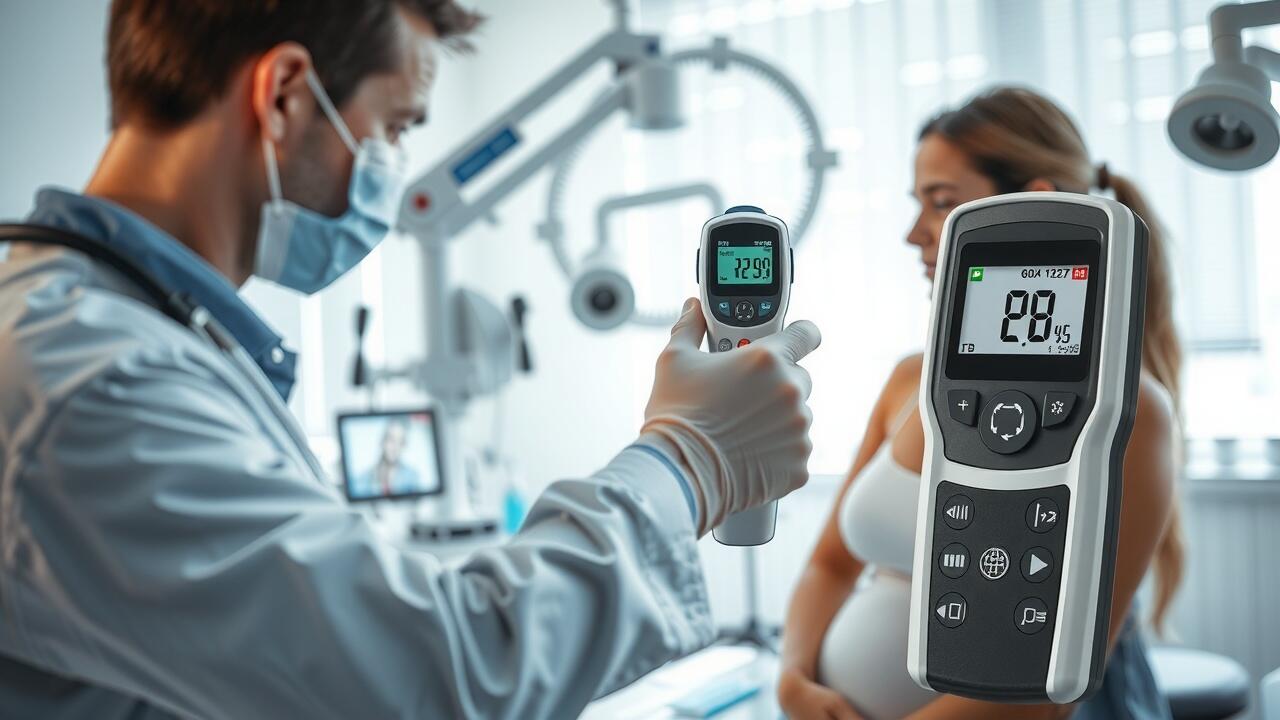
User experience in temperature measurement strongly influences the choice of technology, especially in diverse applications from healthcare to manufacturing. For instance, healthcare facilities often favour non-contact infrared thermometers due to their speed and ease of use, allowing for quick checking of body temperature without physical contact. This convenience proves crucial in settings where patient turnover is high, such as emergency departments. On the other hand, industries requiring precise temperature control, like food processing or pharmaceuticals, often rely on RTD probes or RTD thermocouples. These devices deliver accuracy with a response time suitable for critical operations, ensuring compliance with stringent safety standards.
The design and functionality of temperature measurement tools directly impact efficiency and accuracy. Non-contact devices typically offer features like adjustable emissivity settings to improve readings across various surfaces. This is especially beneficial in manufacturing environments where surface properties may vary. In contrast, RTD thermocouples provide stability and reliability over time, responding well to rapid temperature changes while ensuring consistent performance under fluctuating conditions. For users and technicians, knowing these differences can guide them in selecting the right tools for their specific needs, ultimately enhancing not only operational efficiency but also product quality.
Why Does Ease of Use Matter in Temperature Monitoring?
User experience is crucial in temperature monitoring, as a seamless interface can dramatically enhance operational efficiency. Consider the rapid use of non-contact infrared thermometers in healthcare settings during the pandemic. Their simple point-and-shoot functionality allowed staff to take temperatures quickly, ensuring patient safety without time-consuming procedures. Users could avoid unnecessary contact, lowering the risk of transmission, all while providing accurate readings efficiently.
On the other hand, while RTD probes and thermocouples deliver impressive precision, the complexity involved in their setup and calibration can inhibit speed in critical environments. When a technician is tasked with monitoring temperatures in a frigid industrial context, hassle-free tools that can be quickly deployed become essential. Processes that integrate ease of use lead to more accurate data collection and foster better decision-making. Ultimately, the tools that providers choose can directly impact both safety and efficiency, showing how usability truly matters in temperature monitoring.
The Role of Technology in Temperature Measurement Evolution
The evolution of temperature measurement technology has brought significant changes to how industries approach monitoring processes. Non-contact thermal imaging cameras exemplify this advancement, enabling quick assessments of temperature from a distance, making them ideal for applications in food safety and manufacturing. These systems, utilising advanced infrared technology, often surpass traditional methods in speed, facilitating timely decisions that can directly impact operational efficiency. RTD probes and thermocouples continue to play vital roles in environments where high accuracy is paramount, especially in laboratory and industrial settings.
Integration of smart technologies into temperature measurement systems has transformed user experience drastically. Wireless capabilities allow real-time data transmission, enabling proactive monitoring and deviation alerts. Many industrial sectors favour advanced data analytics to predict equipment failures, further enhancing reliability. For instance, facilities employing RTD thermocouples with IoT connectivity can monitor fluctuations more closely, leading to better maintenance schedules and reduced downtime. Adopting these technologies empowers businesses to not only ensure compliance with safety standards but also optimise their operational workflows, leading to a more streamlined process overall.
How Can Advancements Improve Measurement Reliability?
Enhancements in sensor technology play a vital role in elevating measurement reliability. With the integration of advanced digital signal processing techniques, non-contact temperature measurement devices can now achieve accuracy levels previously exclusive to RTD probes or RTD thermocouples. For instance, thermal cameras equipped with high-resolution sensors can deliver precise temperature readings even from a distance, minimizing the effects of environmental factors that typically disrupt measurements. A recent study reported that using improved infrared sensors resulted in a 15% reduction in measurement errors when compared to older models.
The development of smart algorithms also contributes significantly to improved reliability. These algorithms can learn from previous data to better filter out anomalies and interference, creating a more consistent output. Additionally, incorporating machine learning allows devices to adapt and refine their readings based on real-time environmental changes, such as shifting ambient temperatures. A prime example is a manufacturing facility that implemented smart thermal sensors experienced a 25% increase in overall process efficiency due to more accurate temperature monitoring and control. Investing in such technology not only ensures reliable measurements but also aligns with industry standards for quality and safety.
3 Challenges Faced by Non-Contact Temperature Measurement
Non-contact temperature measurement offers quick and efficient readings but faces limitations that can impact reliability. One significant challenge is interference from environmental factors. Heat sources such as sunlight or nearby machinery can skew readings, making it essential for operators to account for ambient influences. For instance, using an infrared thermometer near industrial equipment may yield inaccurate data due to reflective surfaces absorbing heat. Measurement errors like these highlight the necessity of calibrating equipment in relevant conditions.
Another concern revolves around the need for accuracy in temp-sensitive applications. In cases where precise readings are critical, such as in pharmaceuticals or food safety, the shortcomings of non-contact methods become apparent. RTD probes or RTD thermocouples excel in these scenarios due to their superior stability and lower measurement uncertainty. Industry guidelines recommend combining methods; using non-contact tools for quick screenings followed by RTD systems for verifiable readings can create a balanced approach to temperature management. Addressing these challenges ensures a more dependable framework for various applications within temperature-critical environments.
What Solutions Exist to Overcome These Challenges?
To tackle the challenges of non-contact temperature measurement, manufacturers are investing in advanced calibration techniques that enhance reliability. For instance, implementing dual-wavelength infrared sensors significantly improves accuracy by compensating for variations in emissivity. A notable case study highlights a food processing facility that reduced its error margin by 20% through the integration of sophisticated sensor technology. Reliable measurement isn’t just about technology; it’s also about using the right tools. Professionals are increasingly turning to RTD probes to ensure consistent readings in environments where contact might be impractical or even hazardous.
Another effective solution involves the use of sophisticated data analytics software, which can interpret temperature readings from non-contact devices in real-time. By leveraging machine learning algorithms, companies can predict temperature anomalies before they lead to significant issues. Additionally, coupling non-contact devices with RTD thermocouples can create a more robust temperature monitoring system. This combination allows users to cross-check results and verify data accuracy, ensuring compliance with industry standards such as ISO 9001. Adopting such comprehensive solutions not only optimizes performance but also enhances safety protocols throughout various applications in healthcare, industrial processes, and environmental monitoring.
- Implement regular maintenance schedules for temperature measurement devices to ensure consistent performance.
- Provide training for staff to correctly interpret and react to temperature data.
- Invest in redundancy systems to cross-verify temperature readings from different sensors.
- Collaborate with technology providers to stay updated on the latest advancements in non-contact measurement.
- Utilize cloud-based platforms for centralized data monitoring and analysis across multiple locations.
- Develop a feedback loop that incorporates insights from temperature data into process improvement efforts.
- Consider industry-specific regulations and standards to align temperature monitoring practices with compliance requirements.
FAQS
What’s the main difference between non-contact temperature measurement and RTD?
Non-contact temperature measurement uses infrared sensors to gauge temperature without touching the object, while RTDs (Resistance Temperature Detectors) measure temperature by correlating the resistance of a material to temperature changes.
Why is precision so important when choosing a temperature measurement method?
Precision plays a huge role in ensuring that the temperature readings are accurate and reliable, which is crucial for applications like medical monitoring or industrial processes, where even slight variations can have significant impacts.
How does user experience affect temperature measurement choices?
User experience matters because if a temperature measurement tool is easy to use and understand, it’s more likely to be adopted successfully. A user-friendly interface can lead to quicker readings, less frustration, and overall better results.
What technological advancements are impacting temperature measurement?
Advancements like improved sensor technology, enhanced data analytics, and wireless connectivity are making temperature measurements more reliable and efficient, ensuring that users get accurate readings faster and with less effort.
What are some common challenges faced by non-contact temperature measurement?
Non-contact measurements can struggle with issues like environmental interference, varying surface emissivity, and the need for calibration. However, solutions like advanced algorithms and specialized sensors can help overcome these hurdles.